Learning Experiences and Supporting Resources
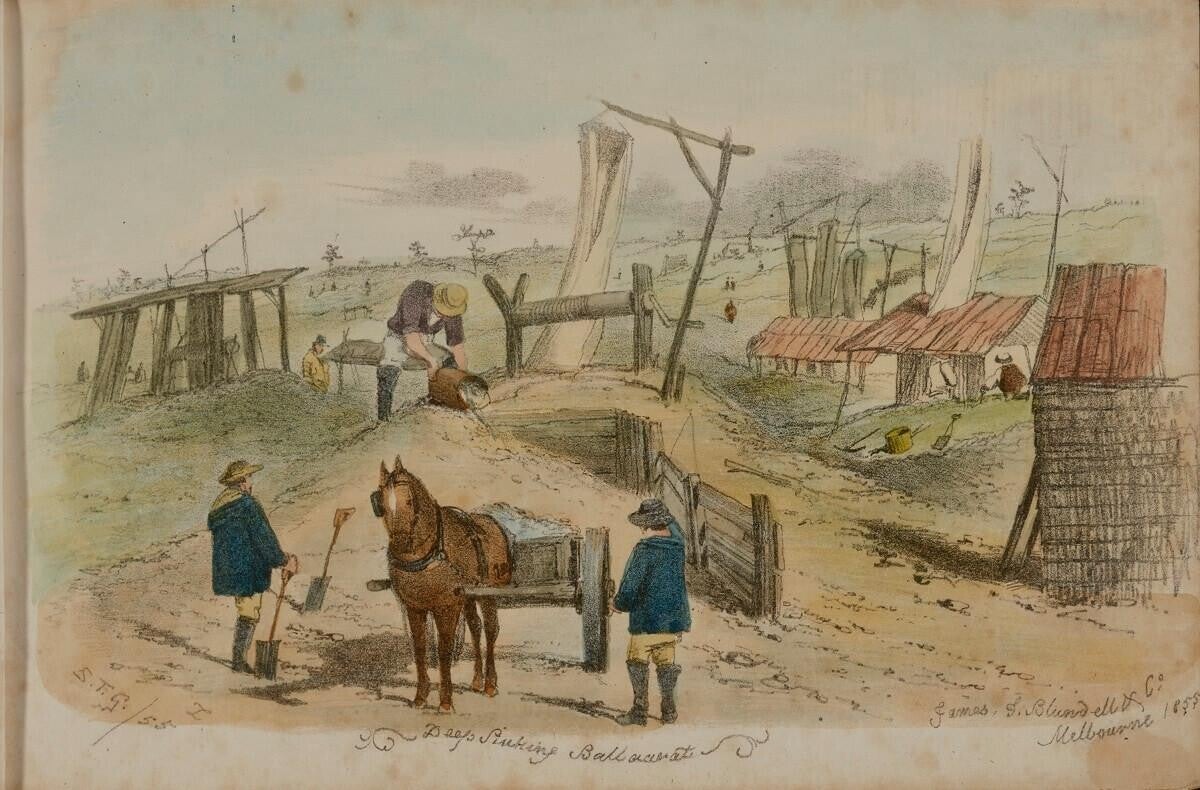
Exploring Sovereign Hill: An Interactive Digital Investigation of the Goldfields
Description
This learning experience allows students to explore Sovereign Hill and the Victorian Gold Rush through digital resources before or after an actual visit to the museum. Students use Sovereign Hill's online learning resources and interactive digital material to investigate important locations and features of the Ballarat goldfields. The digital experience provides an accessible way for students to examine historical environments and consider how the discovery of gold changed the Ballarat community.
The lesson begins with the teacher introducing Ballarat before and during the Victorian Gold Rush. Students consider the inquiry question:
“How did the Victorian Gold Rush change the Ballarat community, and how did people from different backgrounds contribute to that change?”
Students then explore Sovereign Hill's digital resources. Working individually, in pairs or in small groups, they investigate different aspects of goldfields life. These may include mining, accommodation, shops and businesses, transport, schools, migration and the experiences of different cultural groups.
Students can record their observations using a simple digital or printed worksheet divided into three categories:
What can I see?
Students identify buildings, objects, clothing, tools and environmental features.
What does this tell me about life on the goldfields?
Students make inferences about work, family life, technology, transport and community organisation.
What questions do I still have?
Students develop historical inquiry questions that can be investigated using additional sources.
The teacher can extend the digital exploration through Sovereign Hill's online learning resources and self-guided educational materials. For example, students can investigate resources dealing with immigration, mining, life on the diggings and Aboriginal people and the goldfields.
An important component of this experience is recognising that the Ballarat goldfields were not an empty landscape before the arrival of miners. The region is part of the Country of the Wadawurrung people, whose history extends far beyond the Gold Rush period. Sovereign Hill's Hidden Histories: The Wadawurrung People resource can be used to introduce students to Wadawurrung perspectives and encourage them to consider how the Gold Rush and rapid colonial expansion affected Traditional Custodians.
Students can then compare this perspective with the experiences of migrants who travelled to Victoria seeking gold. This allows the class to discuss how the Gold Rush brought together people from different backgrounds while also producing significant social, cultural and environmental change.
Following the digital investigation, students create a simple digital “Then and Now” presentation. They select three aspects of Ballarat during the Gold Rush and explain how the community changed. For example, a student might examine population growth, housing and businesses or changes to the physical environment caused by mining.
Digital Resources
- Sovereign Hill Learning Resources
https://www.sovereignhill.com.au/learning/learning-resources/ - Sovereign Hill Self-Guided Museum Tours
https://www.sovereignhill.com.au/learning/self-guided-museum-tours/ - Sovereign Hill – Hidden Histories: The Wadawurrung People
- Sovereign Hill interactive digital map and virtual exploration resources
Annotation
This digital resource is valuable because it provides an immersive and accessible way for students to investigate the Gold Rush even when an excursion to Sovereign Hill is not possible. Students are not simply receiving historical information from the teacher; instead, they explore historical environments, make observations, ask questions and construct explanations from evidence.
The multimodal nature of the resources also supports diverse learning needs. Images, videos, maps, written information and interactive elements provide multiple ways for students to access historical knowledge. The inclusion of Wadawurrung perspectives is particularly important because it encourages students to understand that the history of the Victorian Gold Rush involved multiple experiences and perspectives rather than a single story of European miners searching for gold.
The experience therefore supports historical inquiry, critical and creative thinking, digital literacy and ethical understanding while maintaining a clear connection to AC9HS3K01.
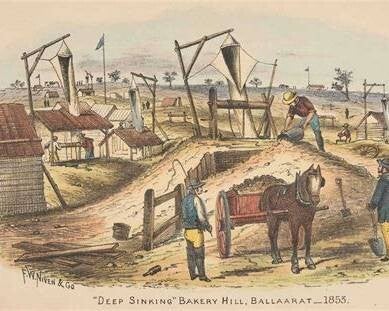
Analysing Primary Sources: Voices and Images from the Ballarat Goldfields
Description
This learning experience develops students' historical inquiry skills through the examination of primary and historical sources relating to the Ballarat goldfields. Students examine a teacher-curated collection of photographs, letters, diary extracts, newspaper material, illustrations and other historical evidence relating to life during the Victorian Gold Rush.
The experience begins by introducing students to the concept of a historical source. The teacher explains that historians use evidence left by people in the past to investigate what life may have been like. Rather than simply telling students what happened during the Gold Rush, students are encouraged to behave like young historians and discover information from the evidence themselves.
Students are shown a historical photograph or image relating to Ballarat. Before receiving background information, they answer questions such as:
- What can you see?
- Who do you think these people are?
- What are they doing?
- What objects or buildings can you identify?
- What might this image tell us about life at the time?
- What can't this source tell us?
- What questions would you like to ask the people in the image?
Students then examine several different sources in small groups. These could include photographs of mining areas and the developing Ballarat township, reproduced letters or diary extracts from people living on the goldfields, newspaper reports and advertisements, and images showing shops, houses, transport and community life.
Each group completes a simple source-analysis worksheet containing four headings:
Observe: What can you see or read?
Think: What do you think this tells us about life during the Gold Rush?
Question: What questions does this source make you ask?
Connect: How does this source help explain how Ballarat changed?
This structure is appropriate for Year 3 because it introduces historical source analysis without requiring students to use complex historical terminology.
Students can then compare two different sources. For example, they could compare a photograph of a mining settlement with an image of Ballarat after substantial community development. Students identify changes in buildings, roads, businesses, population and technology.
The activity should also deliberately include sources representing different experiences of the Gold Rush. Students can investigate the experiences of European settlers and miners, Chinese migrants, women and children, and First Nations peoples. Sovereign Hill's resources relating to Aboriginal people and the goldfields and immigration provide useful supporting material.
Including these perspectives enables students to recognise that people experienced historical change differently. For some migrants, the Gold Rush represented opportunity and the possibility of prosperity. At the same time, rapid colonial expansion and mining caused significant disruption to Country and to the lives of Aboriginal communities.
As a concluding activity, students select one source and write a short museum label explaining what it shows and why it is useful for understanding the history of Ballarat. Alternatively, students could record a short audio explanation, allowing the task to be differentiated for students with different literacy needs.
Text/Visual Resources
- Teacher-created PDF booklet containing selected historical sources and teacher annotations
- Sovereign Hill historical and educational resources
- Historical photographs and illustrations relating to Ballarat and the Victorian Gold Rush
- Sovereign Hill self-guided learning resources
- Source-analysis worksheet using the Observe–Think–Question–Connect structure
Annotation
Primary and historical sources are particularly useful in HASS because they allow students to investigate evidence rather than simply memorising historical facts. Photographs, letters, newspapers and illustrations provide tangible connections with people and places from the past and encourage students to ask questions about how people lived.
The activity directly supports AC9HS3K01 because students use historical evidence to investigate changes to the Ballarat community and the contributions and experiences of people from diverse backgrounds. It also develops literacy as students interpret written and visual texts, discuss evidence and communicate historical explanations.
Importantly, using multiple sources encourages students to recognise that history can be viewed from different perspectives. Incorporating Aboriginal and migrant experiences helps prevent the Gold Rush from being presented as a single celebratory narrative and instead encourages students to develop a more thoughtful understanding of Australian colonial history.
Create Your Own Website With Webador